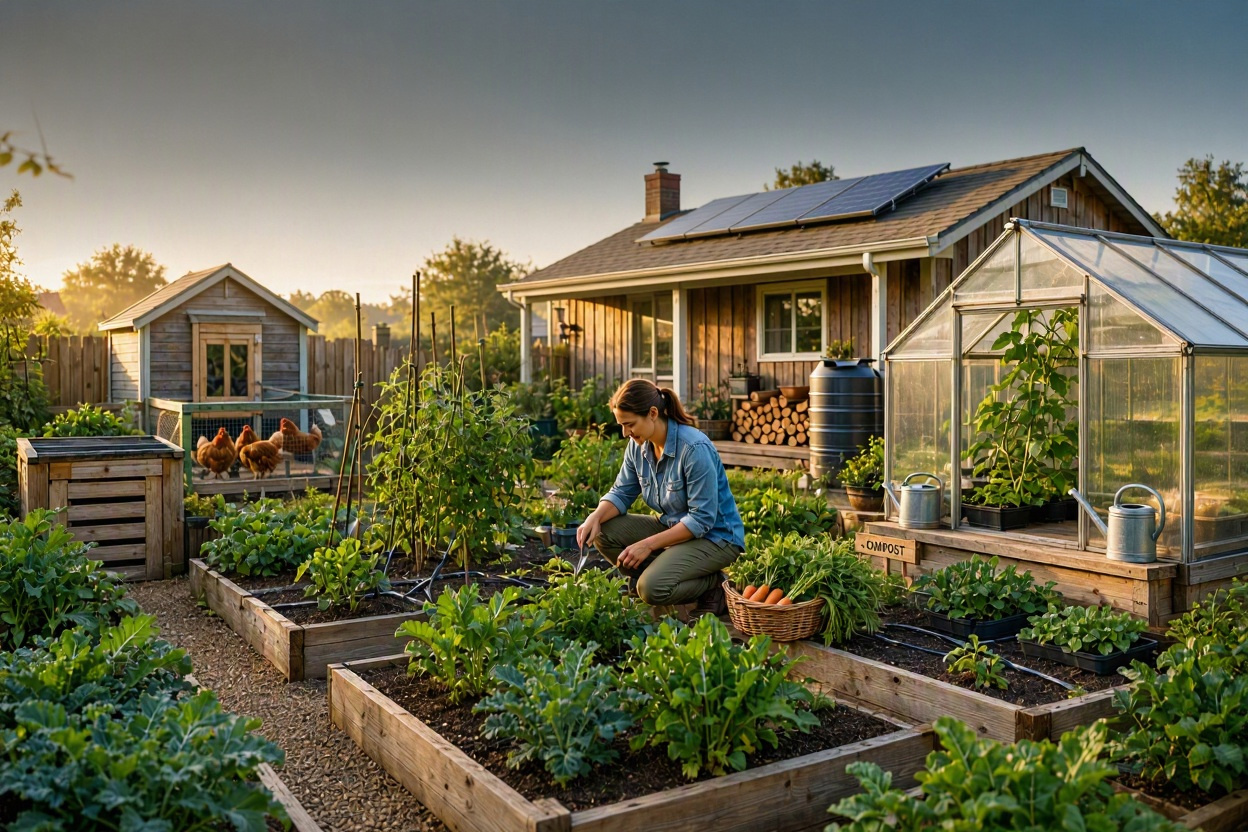
In an era of rising food costs, supply chain uncertainty, and chemical-heavy produce, true freedom starts right in your own outdoor space. Learning how to build a self sufficient backyard is no longer just a hobby for remote homesteaders; it is a practical, life-changing lifestyle shift for anyone with a patch of land.
Whether you have a modest quarter-acre lot or a sprawling rural property, transforming your yard into a high-yielding mini-homestead allows you to produce your own organic food, generate clean energy, conserve water, and drastically lower your monthly bills.
In this ultimate guide, we will explore the foundational principles of backyard homesteading, step-by-step methods for maximizing small spaces, and how you can achieve off-grid resilience without spending a fortune or making costly mistakes.
What Does It Mean to Have a Self-Sufficient Backyard?
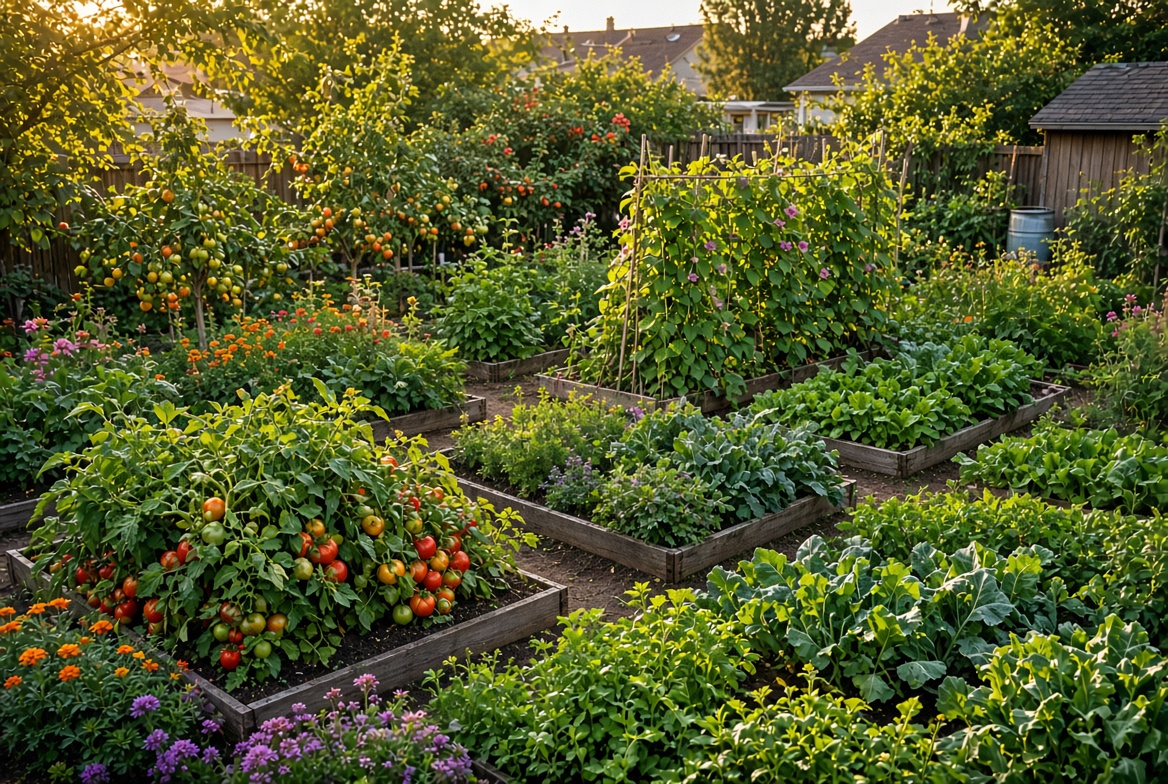
At its core, a self sufficient backyard is a closed-loop ecosystem designed to generate essential human resources—primarily food, water, and energy—with minimal reliance on external municipal systems.
Unlike traditional landscaping, which consumes resources (water, chemical fertilizers, energy for mowers) to maintain purely decorative lawns, a self-sustaining yard gives back far more than it takes.
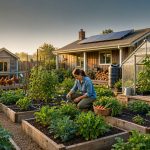
Image: A flourishing, biodiverse permaculture backyard garden providing fresh organic produce.
Key Pillars of Backyard Self-Reliance:
-
High-Yield Organic Gardening: Utilizing vertical growing, raised beds, and permaculture companion planting.
-
Rainwater Harvesting & Water Management: Capturing, filtering, and storing water for year-round irrigation.
-
Small-Scale Livestock Husbandry: Raising chickens, quail, or rabbits for fresh eggs and nutrient-dense fertilizer.
-
Soil Health & Composting: Turning organic waste into rich soil amendments without commercial chemicals.
-
Alternative Energy Generation: Implementing simple solar micro-systems or wind capture for emergency backup power.
-
Year-Round Food Preservation: Root cellars, canning, dehydrating, and cold-frame growing to survive winter months.
Why Small-Space Self-Sufficiency is the Future
Many people mistakenly believe that achieving true food independence requires hundreds of acres of farmland. However, with modern permaculture design techniques and intensive gardening systems, a standard suburban family home can grow up to 75% of its fruit and vegetable needs on as little as a quarter-acre.
Benefits of Transforming Your Yard Today:
-
Unbeatable Food Security: Protect your family from grocery store shortages and sudden price hikes.
-
100% Organic Nutrition: Harvest chemical-free fruits and vegetables picked at peak nutrient density.
-
Drastic Cost Savings: Slash your grocery bills and utility expenses permanently.
-
Environmental Sustainability: Reduce your carbon footprint by eliminating food transportation and waste.
-
Complete Peace of Mind: Gain confidence knowing your family can thrive during power outages or economic downturns.
Step 1: Mapping and Designing Your Backyard Permaculture Layout
Before digging up your grass or purchasing seeds, successful backyard self-sufficiency requires a clear, strategic layout. Permaculture uses the concept of “zones” to ensure maximum efficiency and minimal daily labor.
The 5 Permaculture Zones Simplified:
-
Zone 0: The home itself (kitchen, indoor seed-starting setups, worm farms).
-
Zone 1: Immediate output areas visited multiple times daily (herbs, salad greens, rainwater collection taps).
-
Zone 2: Main food production (raised garden beds, chicken coops, fruit trees, composting bins).
-
Zone 3: Main crops requiring less daily attention (root vegetables, squash patches, berry bushes).
-
Zone 4 & 5: Semi-wild areas, woodlots, or dedicated conservation zones for pollinators.
Assessing Your Property’s Microclimates
To get the highest yield from your self sufficient homestead, observe your yard across different seasons:
-
Sun Exposure: Identify areas receiving 6–8 hours of direct sunlight for heavy feeders like tomatoes and peppers.
-
Shade Traps: Dedicate shady zones to leafy greens (spinach, kale) or mushrooms.
-
Water Flow: Locate low spots where rainwater naturally pools to install rain gardens or swales.
Step 2: High-Density Food Production Techniques
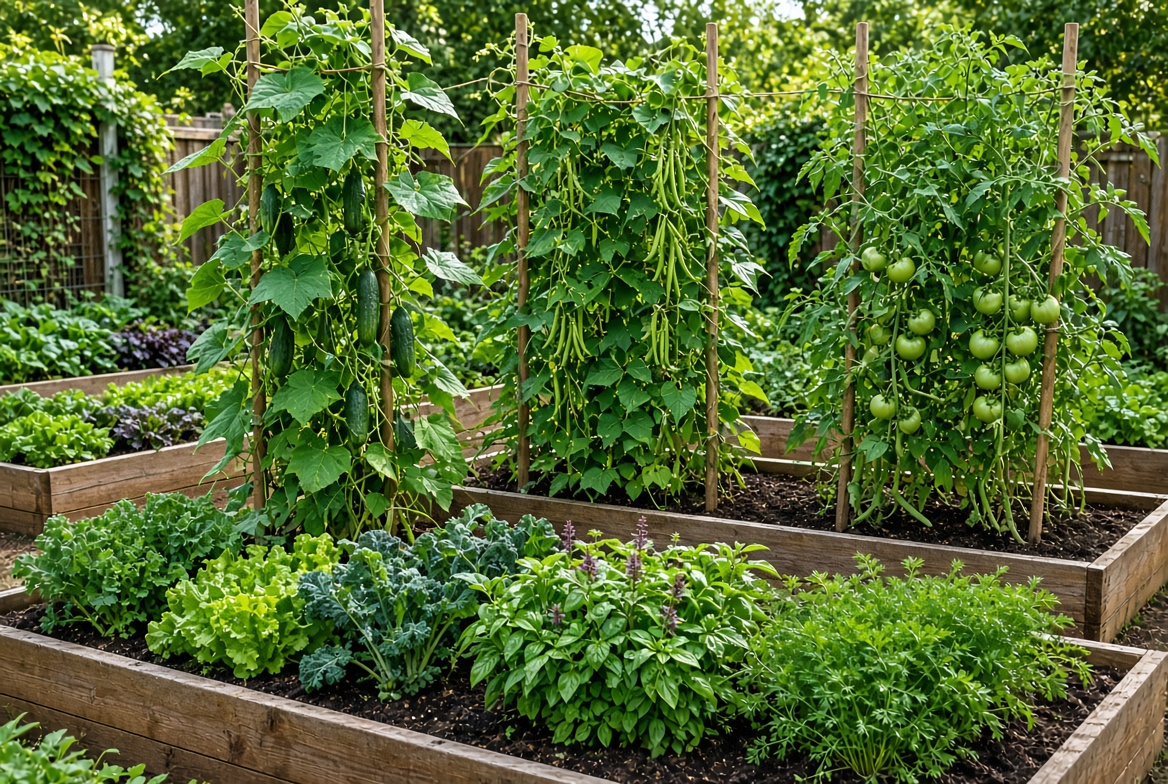
If you are working with limited square footage, traditional row farming is wildly inefficient. To maximize your yield per square foot, employ high-density organic gardening strategies.
Image: Raised garden beds utilizing vertical trellises to double harvest output.
1. Raised Bed Gardens
Raised beds give you total control over your soil quality, prevent compaction, and drain excess water naturally. Utilizing the Hügelkultur method—filling the base of raised beds with decaying logs, branches, and compost—creates a self-watering, nutrient-rich foundation that feeds your plants for years.
2. Vertical Gardening Systems
Grow upwards instead of outwards. Use trellises, arbors, wall-mounted planters, and vertical towers for vine crops like cucumbers, pole beans, squash, and tomatoes. Vertical growth improves airflow, reduces disease risk, and triples your growing area.
3. Year-Round Greenhouse and Cold Frames
Extend your growing season into late autumn and early spring. A simple DIY greenhouse or low-cost cold frame protects winter greens (spinach, radishes, carrots, claytonia) even under heavy snowfall.
4. Food Forests and Micro-Orchards
Instead of planting ornamental shrubs, plant dwarf fruit trees (apples, pears, peaches) interplanted with berry bushes (blueberries, raspberries) and ground-cover nitrogen fixers (clover, comfrey). This multi-layered approach mimics natural forest ecosystems.
Step 3: Water Independence and Rainwater Harvesting
Water is the lifeblood of any sustainable backyard system. Relying strictly on city tap water is expensive and leaves your garden vulnerable during drought restrictions or grid failures.
Image: Rainwater barrel connected to house gutters for zero-cost garden irrigation.
Setting Up a Zero-Cost Water System:
-
Roof Rain Barrel Systems: Install diverters on your roof gutters connected to food-grade barrels or large IBC totes. A 1,000-square-foot roof can collect over 600 gallons of water from just one inch of rainfall.
-
Gravity-Fed Drip Irrigation: Elevate your water storage tanks to create natural water pressure without electric pumps, feeding water straight to your vegetable roots.
-
Swales and Contour Trenches: Dig shallow trenches along the natural slopes of your yard to slow, spread, and sink rainwater directly into the deep soil.
-
Greywater Recycling: Divert non-toxic wastewater from washing machines and bathroom sinks into orchard trees and ornamental plants.
👉 Get The Complete Manual On Self-Sustaining Water, Power, and Food Systems Today!
Step 4: Soil Regeneration and Composting Systems
Healthy plants cannot grow in depleted, chemical-laden soil. Building fertile, living soil rich in beneficial microbes is the single most critical factor for backyard crop yields.
The Ultimate Backyard Composting Methods:
-
Hot Composting: Balancing carbon (“browns” like dry leaves and straw) and nitrogen (“greens” like food scraps and fresh grass clippings) in a 30:1 ratio to produce rich black humus in just 30 to 45 days.
-
Vermicomposting (Worm Farming): Using Red Wiggler worms to decompose kitchen waste indoor or outdoor. Worm castings (worm manure) are widely considered “black gold” for organic gardeners.
-
Cover Crops: Plant nitrogen-fixing cover crops like red clover, winter rye, or hairy vetch during the off-season to naturally fertilize and aerate the soil.
-
Biochar Integration: Adding crushed, charcoal-infused organic material to soil locks in moisture and stores nutrients for decades.
Step 5: Raising Backyard Livestock for Protein and Fertilizer
Integrating small livestock into your self sufficient homestead completes the natural biological loop. Animals consume garden waste and weed seeds while providing fresh food and potent organic manure.
Image: Raising backyard chickens provides daily fresh organic eggs and rich soil fertilizer.
The Best Animals for Small Backyards:
| Livestock Type | Space Required | Core Outputs | Maintenance Level |
| Chickens | 4 sq ft per bird | Fresh eggs, pest control, high-nitrogen manure | Low–Medium |
| Coturnix Quail | 1 sq ft per bird | Fast egg/meat production, compact cage friendly | Very Low |
| Meat Rabbits | Compact hutches | Lean protein, cold manure (ready to apply directly) | Low |
| Honeybees | 3×3 ft hive space | Raw honey, beeswax, complete garden pollination | Very Low |
Step 6: Off-Grid Energy and DIY Power Generation
To achieve full backyard independence, your setup should maintain operations even during power outages. Modern micro-off-grid technology is affordable, modular, and easy to build.
Essential DIY Backyard Energy Projects:
-
Miniature Solar Generators: A simple setup of two 100W solar panels connected to a deep-cycle battery can keep garden pumps, incubators, freezer units, and essential lights running indefinitely.
-
Solar Dehydrators: Build a zero-electricity wooden box with angled glass to dry fruits, herbs, and meats naturally using solar heat.
-
DIY Solar Water Heaters: Use coiled black poly tubing under a glass frame to heat water for outdoor showers or livestock cleaning.
-
Biogas Digesters: Convert animal manure and kitchen scraps into clean methane gas for outdoor cooking burners.
Step 7: Food Preservation and Long-Term Storage
Growing abundant crops is only half the battle; knowing how to store food long term guarantees year-round self-sufficiency through winter and spring.
       [ Backyard Harvest ]
                │
   ┌────────────┼────────────┐
   ▼            ▼            ▼
[ Canning ] [ Dehydrating ] [ Cold Storage ]
 (Mason Jars) (Herbs/Jerky)  (Root Cellar)
Essential Preservation Methods:
-
Water Bath & Pressure Canning: Safely preserve high-acid foods (tomatoes, pickles, jams) and low-acid foods (meats, stews, beans) for up to 3–5 years without refrigeration.
-
Dehydration and Freeze-Drying: Remove moisture from herbs, apples, berries, and root vegetables for lightweight, shelf-stable storage.
-
In-Ground Root Cellars: Utilize cool earth temperatures (40–50°F / 4–10°C) to store potatoes, onions, carrots, winter squash, and cabbage for 6 months or more.
-
Fermentation: Produce gut-healthy probiotics while preserving cabbage (sauerkraut, kimchi), cucumbers, and hot sauces.
Overcoming Common Backyard Homesteading Challenges
Starting a self sufficient backyard project can feel overwhelming if you try to do everything at once. Avoid these common pitfall traps:
-
Doing Too Much Too Soon: Start with 2–3 raised beds and a rainwater barrel. Master those before introducing livestock or off-grid solar setups.
-
Ignoring Local Regulations: Check municipal codes regarding chicken flock sizes, beehive setbacks, rainwater collection laws, and structure heights.
-
Poor Soil Preparation: Never plant directly into dead subsoil without amending it with organic compost and living soil biology first.
-
Inadequate Pest Protection: Install physical barriers (fencing, netting, raised bed covers) early before pests ruin months of hard work.
Ready to Turn Your Backyard into a Self-Sustaining Paradise?
Transforming your ordinary yard into a productive, eco-friendly homestead is one of the most rewarding journeys you will ever take. You don’t need a degree in agriculture or hundreds of thousands of dollars to build security, resilience, and true independence right at home.
If you want a step-by-step master guide that shows you exactly how to design, build, and maintain a high-yielding, off-grid property—complete with detailed plans, blueprint diagrams, and low-cost DIY projects—look no further than The Self-Sufficient Backyard.